Stock Image 1:
Stock Image 2:
Can Learners Drive on Motorways? UK Rules Explained (2026 Guide)
Can learners drive on motorways? Yes—this has been legal in Great Britain since 2018, but the conditions are strict and often catch people out.
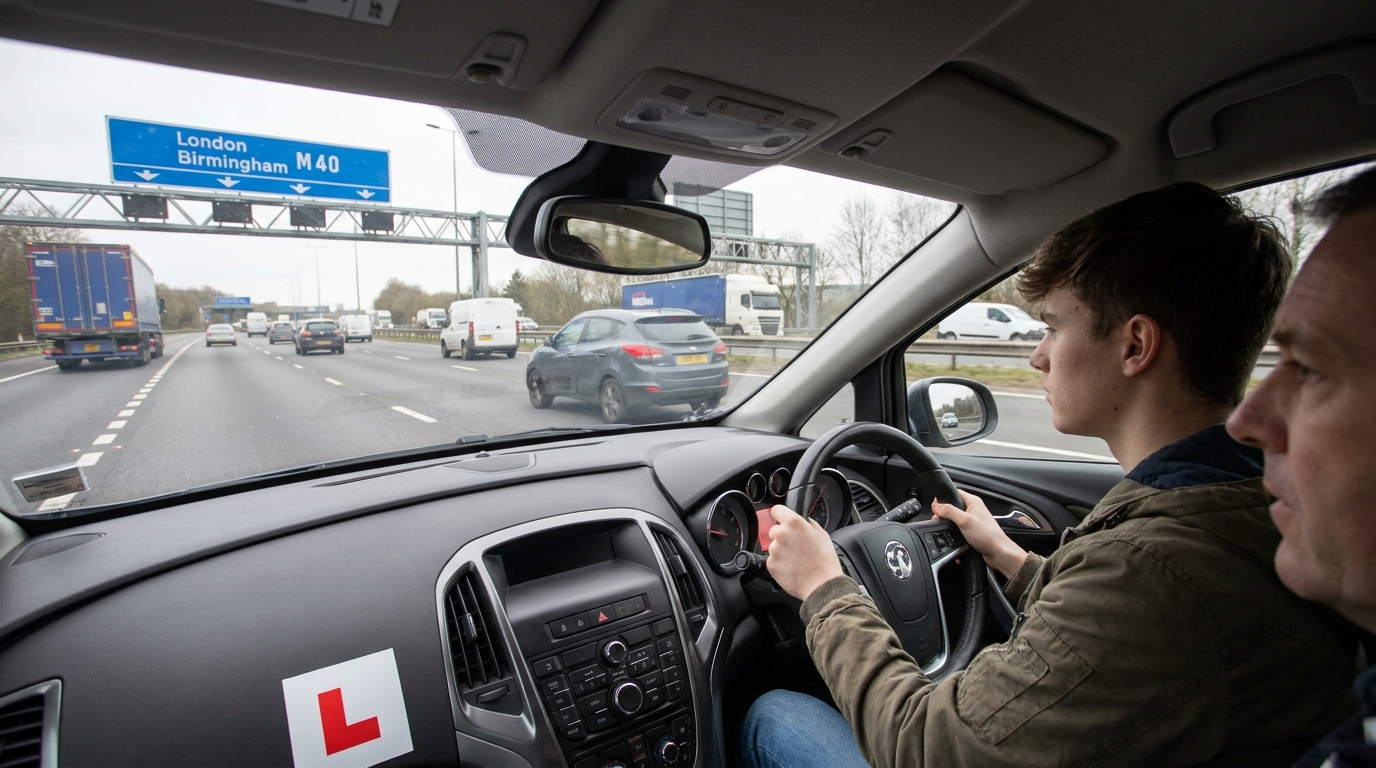
A learner can only drive on a motorway with an approved driving instructor in a car fitted with dual controls. No parent, partner or friend can take them, no matter how experienced they are, and PDIs (trainee driving instructors) are not permitted to supervise motorway lessons. This guide explains the current rules in Great Britain, what happens in a motorway lesson, and the safest way to build experience before and after the driving test.
So, Can Learners Drive on Motorways?
Yes. Since June 2018, when the government first allowed learners on motorways, provisional licence holders have been able to use motorways in England, Scotland and Wales, as long as two conditions are met: they must be accompanied by an approved driving instructor (ADI) and the car must be fitted with dual controls.
The change was introduced so learners could experience higher-speed roads under professional supervision, rather than facing a motorway alone for the first time after passing. Before then, a new driver’s first motorway journey often happened on their first day as a full licence holder.
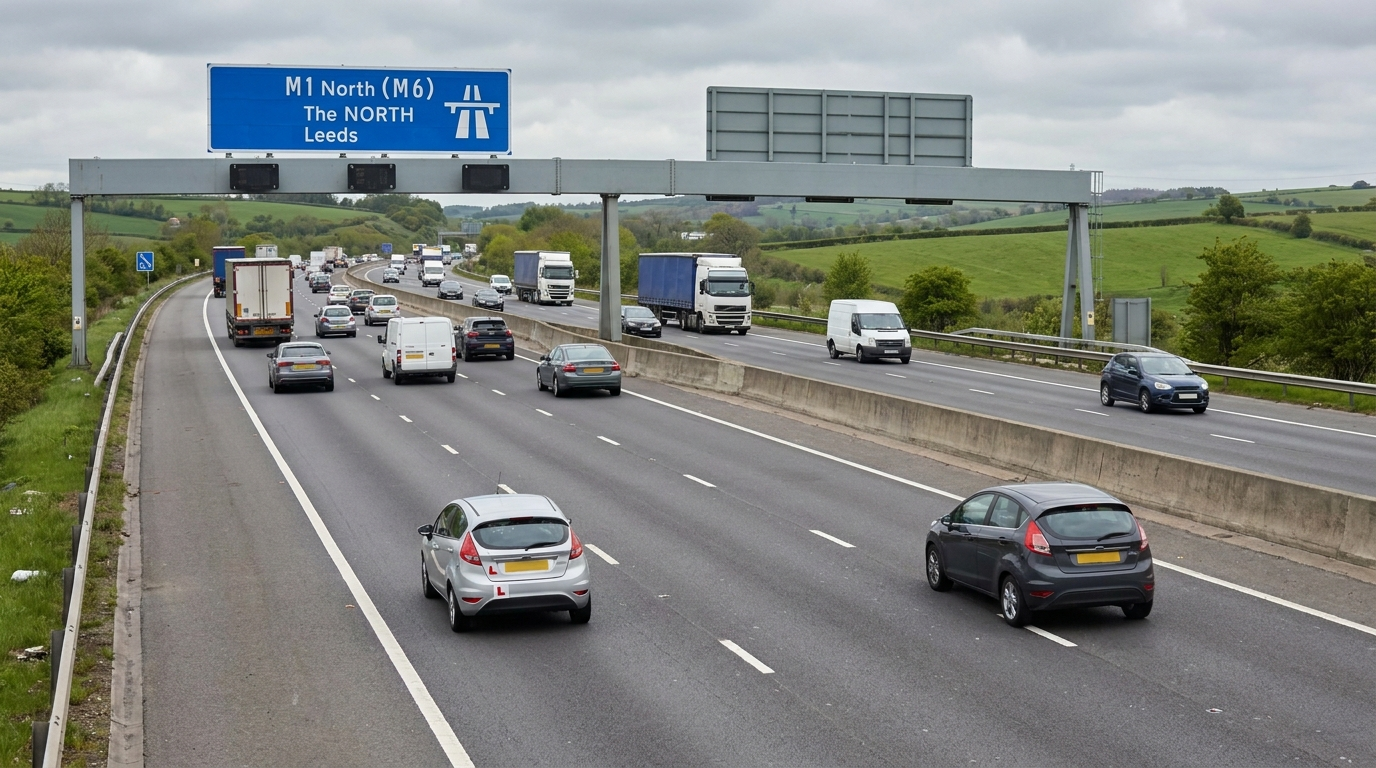
All other learner rules still apply. L plates stay on (D plates in Wales), the learner follows the same speed limits and lane rules as everyone else, and the motorway section of the Highway Code applies in full.
Who Can Supervise a Learner on the Motorway?
Only an approved driving instructor (ADI). This is the point that trips most people up.
On ordinary roads, a learner can practise with any supervising driver who is over 21 and has held a full licence for at least three years. Motorways are different: the law does not extend that arrangement to motorways. That means a parent, sibling, partner or friend cannot supervise a learner on a motorway, even in the family car and even with learner insurance in place. Only a fully qualified ADI may provide motorway tuition.
There is a clear reason for this. A supervising passenger can offer advice, but an instructor brings training, experience teaching at speed and a second set of pedals. On a road where traffic may be travelling at 70mph, that difference matters. GOV.UK provides a more comprehensive guide to driving lessons and learning to drive for further reference.
So, if you want real motorway practice before your test, the only legal option is professional motorway tuition with an approved instructor in a properly equipped car.
Why Dual Controls Matter on Motorways
Dual controls are an extra set of pedals fitted on the passenger side of the instructor’s car. They let the instructor brake—and, in some cars, operate the clutch—if the learner misjudges a situation.
On a quiet residential street, mistakes usually unfold slowly. On a motorway, traffic closes distance quickly, and a moment of hesitation on a slip road can put a learner in the path of fast-moving vehicles. An instructor who can intervene in a split second removes much of that risk, which is why the law requires dual controls.
What a Motorway Lesson Actually Involves
Motorway lessons focus on calm, controlled decision-making at higher speeds—not simply learning to drive faster. Official DVSA Ready to Pass guidance explains that learners can take motorway lessons with an approved driving instructor in a dual-controlled car, and that motorway driving is not part of the practical test. A typical session covers the skills many drivers struggle with most after passing:
- Joining from a slip road: Matching the speed of traffic, timing the merge and avoiding the temptation to force your way in
- Lane discipline: Keeping left unless overtaking, then moving back once you are safely past
- Safe following distance: At 70mph, you need a much larger gap than on a 30mph road
- Overtaking: Mirror checks, blind-spot checks and judging the speed of vehicles approaching from behind
- Smart motorways: Variable speed limits, red X signals, and using emergency refuge areas where there is no hard shoulder
- Leaving the motorway: Planning your exit early and reducing speed on the slip road, not the main carriageway
Before that step, it also helps to feel confident with vehicle safety checks, mirror routines and speed judgement on faster ordinary roads. Like your first driving lesson, everything is structured around your current ability. An instructor will not take a nervous learner onto the M1 at rush hour. The route is planned, the pace is built gradually, and the instructor decides when you are ready for busier stretches.
Motorways, Dual Carriageways and the Driving Test
Motorway driving is not part of the standard practical test, and motorway lessons are not compulsory. You can pass your test without ever driving on one.
That said, the skills overlap significantly. Observation, lane discipline, mirror routines and anticipating other drivers’ actions are exactly the habits examiners look for, and a motorway session helps sharpen them under real pressure.
One common point of confusion is that dual carriageways are not motorways. A learner can drive on a dual carriageway with any qualified supervising driver, not just an instructor, because a dual carriageway is legally an ordinary road—even where the speed limit reaches 70mph. For learners building confidence on faster local routes, driving lessons in Milton Keynes can help bridge the gap between everyday road practice and later motorway tuition. The stricter motorway rules for learner drivers apply only to roads classed as motorways.
After You Pass: Building Motorway Confidence
That restriction disappears the moment you pass. A newly qualified driver can legally drive on any motorway alone, with no L plates. However, being allowed to drive on motorways and feeling confident doing so are two different things. Many new drivers avoid motorways for months because they have not been taught how to handle them.
There are a few sensible options. Pass Plus includes a motorway module designed for new drivers. A post-test motorway lesson gives you the same dual-controlled safety net you had as a learner. If you passed a while ago but still find motorways stressful, refresher driving lessons in Bedford, Milton Keynes and other areas can focus on exactly that.
Rules Can Differ, So Check Before You Go
The rules in this guide apply in Great Britain. Northern Ireland has its own driver licensing system and restrictions for learners, so anyone learning there should check the official Northern Ireland learner restrictions first.
Rules also change over time. Speed limits, smart motorway guidance, and learner regulations evolve, so before any motorway session, it is worth checking the latest Highway Code motorway rules. If you are unsure about your specific situation, ask your instructor or the DVSA directly.
Frequently Asked Questions
Can learner drivers drive on motorways in the UK?
Yes, learner drivers in England, Scotland and Wales can use motorways, but only with an approved driving instructor in a dual-controlled car. This has been allowed since June 2018. Learners in Northern Ireland should check local guidance, as the rules differ.
Can a learner drive on the motorway with a parent?
No. Even a parent who meets the normal supervising-driver rules (over 21, with a full licence held for at least three years) cannot supervise a learner on a motorway. The law requires a qualified instructor with dual controls, regardless of who owns the car or what insurance is in place.
Are motorway lessons compulsory for learner drivers?
No. Motorway driving is not part of the practical test, and you can pass without ever driving on a motorway. Motorway lessons are optional, but they are the only legal way to gain real motorway experience before you have a full licence.
Can newly qualified drivers drive on motorways straight after passing?
Yes, immediately and alone. There is no probationary motorway restriction for new drivers in Great Britain. Because it’s legal from day one, many new drivers book a post-test motorway lesson or a Pass Plus module so their first solo motorway drive isn’t also their first ever motorway drive.
What should learners practise before motorway driving?
Build confidence on faster ordinary roads first—dual carriageways, merging, lane discipline, and mirror routines at 60 or 70mph. A solid habit of checking mirrors and blind spots before changing lanes makes the step up to a motorway far less intimidating.
Ready to Book Your Driving Lessons?
If you are learning to drive and want to build real skill and confidence on the road, structured lessons with an approved instructor in a dual-controlled car are the safest place to start.
At Drive Like A Boss, our DVSA-certified instructors offer manual and automatic driving lessons across Bedford, Milton Keynes and the surrounding areas, from first lessons and mock tests to refresher and motorway sessions. We provide structured practice at your pace.
To book lessons or ask a question, contact our instructor team, email hello@drivelikeaboss.co.uk, call 0345 067 8055, or send text enquiries to 07822 000 397.