A Guide for Parents
Supporting Your Teen Behind the Wheel
Learning to drive isn’t just about lessons — for many it is a partnership between the instructor, the learner, and you. Private practice can make a huge difference to confidence and progress. But it’s also completely normal for both you and the learner to find it challenging. Different cars, different teaching styles, and the natural parent–child dynamic can all make practice sessions feel harder than they should be.
This guide is designed to help you support your son or daughter in a calm, consistent, confidence‑building way.
Why Consistency Matters (and Why It’s Hard)
Your teen is learning brand‑new skills. Consistency helps them feel safe and in control. But when they’re switching between:
- Two different cars
- Two different teaching styles
- Two different sets of expectations
Instructors teach in structured, bite‑sized steps. Parents often jump ahead because you’ve been driving for years — what feels “obvious” to you may be brand‑new to them. A small mismatch in expectations can feel huge to a learner.
Why Does The Car Feel Different?
Even experienced drivers forget how dramatically different cars can feel. For a learner, those differences are magnified. Here’s what they’re dealing with.
PETROL vs DIESEL: TWO VERY DIFFERENT EXPERIENCES
Petrol Cars
- Need more revs to get moving
- More likely to stall
- Lighter, more sensitive clutch
- Faster, more responsive acceleration
Diesel Cars
- Pull away with less effort
- Much harder to stall
- Heavier clutch feel
- Slower, steadier acceleration
To a learner:
A learner might feel they’re making great progress in their instructor’s car, especially as they start to recognise how that specific car sounds, responds, and feels. When they then try to apply those same skills in your car at home, everything can feel quite different — from the bite point to the steering weight to the general noise of the engine. That change alone can make them think they haven’t progressed as much as they truly have. In reality, they’re just adjusting to a new vehicle, not starting again.
Engine Size: Why a 1.0L Feels Nothing Like a 1.6L
Smaller Engines (1.0L–1.2L)
- Need more revs to move off
- Slower to accelerate
- Require earlier gear changes
- Feel lighter and more sensitive
Larger Engines (1.4L–1.6L+)
- Pull away more easily
- More forgiving if the clutch isn’t perfect
- Stay in each gear longer
- Feel heavier and more stable
To a learner:
A small engine can feel “weak” or “jumpy”. A bigger engine can feel “easier” but also “faster than expected”.
The Parent–Child Dynamic: Why It Feels So Intense
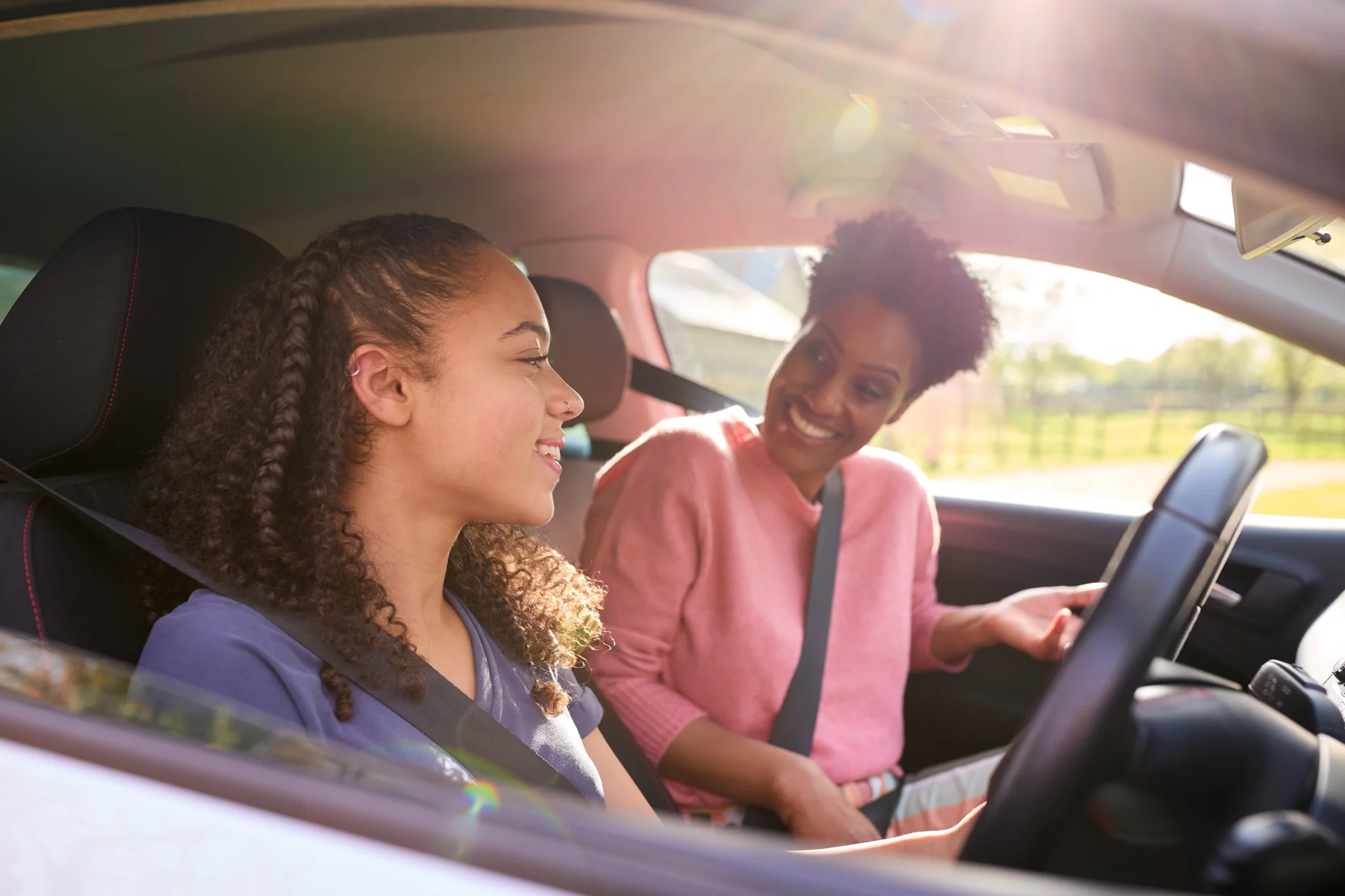
It can feel intense – dynamic in the car is different.
Even the calmest parents can feel their heart rate rise when their son or daughter first gets behind the wheel. Private practice at home is a completely different dynamic from what your learner is used to with their instructor.
- They know you don’t have dual controls
- You know you don’t have dual controls
- Communication naturally feels different from what they experience in lessons
- Your learner may feel pressure to “perform” because they want to do well and make you proud
All of this is normal. It doesn’t mean you’re doing anything wrong — it simply reflects the shift in roles and expectations when learning moves from the instructor’s car to yours.
How Can Parents Provide Support During Private Practice
Here are simple, powerful ways to make practice sessions smoother and more effective:
Start in calm and quiet areas
Give your learner space to settle in and build confidence before adding complexity. Let the get used to the different car and dynamic in the vehicle.
Agree a plan before you set off
A quick chat about what you’ll practise can help reduce pressure and anxiety. Decide how best to give directions, your learner might prefer to follow a Sat Nav. You might also prefer this as it also takes the pressure off of you.
Reassure them that your car will feel different
Bite point, steering, pedals, visibility — it all changes. Remind them this is normal.
Keep communication simple and steady
Short, clear instructions help them stay calm and focused.
Praise
Notice the small wins: good observations, smoother clutch work, calmer decision‑making.
Avoid late / last moment directions
Learners need time to process information. Early prompts make everything feel safer and smoother.
Stay composed, even if you feel tense
Your learner will mirror your energy. A calm environment in the car will helps create a calm driver.
Avoid comparisons
Every learner progresses at their own pace — comparing them to siblings, friends, or yourself won’t help them.
Make it a partnership with their instructor.
Don't over do it
Learning is mentally demanding, short regular drives will help your learner to develop their skills.
Breaks and pauses during a drive can help to reset their focus.
Remember you might also need a break, it can be demanding for you too!
Talk to the instructor regularly
Ask what skills your learner is currently working on and what would be most helpful to practise at home.
Share any concerns or observations with the instructor
If something feels tricky during private practice, let the instructor know as they can help address it in lessons.
Some instructors are happy for parents to sit in on a lesson
Watching from the back can give you insight into the instructor’s communication style, the terminology they use, and how they structure practice. It helps you mirror that approach at home.
When parents and instructors work in partnership, learners feel supported, understood, and far less pressured. That shared approach creates a more positive, confident learning journey for your young driver.
How Cars Are Different Now
There are some clear differences between the way learners are taught today and the way many parents learnt. You’ll hear new terminology and see techniques that might not have existed when you took your test. A big part of this is simply that modern cars behave differently. Braking systems are far more powerful and responsive, engines are designed to stay in higher gears for longer, and overall control is lighter and more sensitive. Because of this, learners are taught methods that suit how today’s cars are built to perform. Brakes are sharper and more efficient, so slowing down is smoother and more controlled.
Brakes to slow and gears to go
Brakes are designed to reduce your speed. That’s their whole job. Modern cars have powerful braking systems that safely and efficiently slow the vehicle.
How gears should be used in a car
Gears are used to match the engine to the speed of the car, not to control how quickly the car slows down. Lower gears provide more power and control at low speeds (moving off, hills, slow traffic), while higher gears allow smooth, efficient driving at higher speeds. As speed increases, you change up to avoid over‑revving the engine; as speed decreases, you change down only when necessary to keep the engine running smoothly and prevent stalling.
The key principle is:
Use the pedals to control speed, and the gears to match that speed.
Why we should use brakes to slow down (not gears)
1. Brakes are designed to slow the car
Brakes are specifically engineered to slow or stop the vehicle safely, evenly, and predictably. They act on all four wheels and give you precise control over how quickly you reduce speed. Gears and the clutch are not designed for this purpose.
2. Slowing through the gears causes unnecessary wear
Using lower gears to slow the car places extra strain on the clutch, gearbox, and engine. This leads to increased wear, especially on the clutch, which is expensive to repair. Using the brakes instead protects the drivetrain.
3. Brakes improve safety and communication
When you brake, your brake lights warn drivers behind you that you are slowing. If you slow mainly by changing down gears, brake lights may not come on, increasing the risk of being rear‑ended.
Braking first to reduce speed
Gear changes made after braking, to suit the new speed. Brake to reduce speed
Select the appropriate gear for that speed
You do not need to change down through every gear. This is called block changing, and it is both safe, efficient, taught by the instructors and encouraged and expected on the driving test.
Eco driving
Braking is more Eco efficient than slowing down through the gears.
Eco driving is about reducing fuel use, emissions, and mechanical wear, while maintaining smooth, safe progress. Using the brakes rather than slowing through the gears is more eco‑friendly for several reasons:
1. In most modern cars, when you lift off the accelerator and brake while in a higher gear, the engine uses very little fuel (and often none at all). Dropping into lower gears raises engine revs, which increases fuel consumption.
2. High revs waste fuel
Changing down early causes the engine to spin faster than necessary.
Keeping the car in a higher gear while braking avoids this waste.
3. Eco driving encourages minimal gear changes. Every unnecessary gear change uses energy and increases clutch wear. Braking smoothly, then selecting the correct gear once, is more efficient than stepping down through multiple gears.
Brakes slow the car. Gears prepare the car to go.
Vulnerable Road Users at Junctions
Since 29 January 2022, the Highway Code has required drivers to give priority to pedestrians who are crossing or waiting to cross at a junction. During private practice, you’ll often see your son or daughter slowing earlier than you might expect, scanning carefully around the junction, and sometimes coming to a complete stop to let a pedestrian cross—even if that person hasn’t stepped off the kerb yet. This is especially noticeable when turning from a major road into a minor road, where learners are trained to prioritise the most vulnerable road users before committing to the turn.
You might notice them:
- Slowing down sooner and approaching the junction more gently
- Pausing if a pedestrian is near the crossing point
- Waiting even with traffic behind, because pedestrians come first
- Making a smoother, more controlled turn once the area is fully clear
If this feels different from how you were taught, that’s because it is. Today’s learners follow the updated Highway Code, which places greater responsibility on drivers to protect those who are most at risk. Rear observations are also vital in these situations, and if you haven’t already purchased a rear‑view mirror for the passenger side, it can be a really helpful tool. It allows you to support your son or daughter more effectively, especially when they’re slowing early or stopping at junctions. The behaviour of following traffic is an important part of their decision‑making, so you’ll see them using early observations and slower approach speeds as standard. This is normal, expected, and nothing to be alarmed by—it’s simply safe, modern driving.